.png?alt=media&token=155810c5-21da-41d1-bf73-5df542c25145)
Global Peace Movement president highlights former governor’s record in education, healthcare, roads, regional development and national leadership
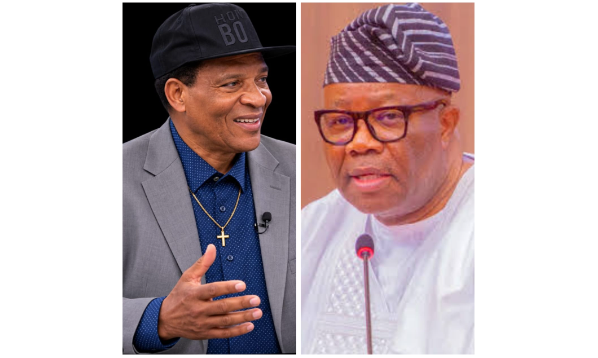
Dr Mike Uyi, President of Global Peace Movement International UK, has highlighted the public-service record of Senate President Godswill Akpabio, describing his years in government as a period marked by major infrastructure projects, social interventions and initiatives aimed at expanding opportunities for ordinary Nigerians.
Uyi said Akpabio’s journey through public service, from his years as governor of Akwa Ibom State to his tenure as Minister of Niger Delta Affairs and his present position as President of the Senate, provides an opportunity to examine how leadership decisions can influence communities, institutions and human development.
According to him, the enduring value of leadership lies not merely in the offices occupied or the titles acquired, but in the institutions established, infrastructure delivered, opportunities created and lives touched.
He noted that Akpabio’s administration as governor between 2007 and 2015 witnessed extensive construction and rehabilitation of roads, investments in education and healthcare, and the development of facilities intended to strengthen the state’s economic and social infrastructure.
One of the administration’s most significant interventions, Uyi said, was the introduction of free and compulsory education for children from primary through senior secondary school.
The policy was accompanied by the construction of more than 4,000 classroom blocks and the rehabilitation of approximately 2,000 schools, according to Akpabio’s official profile. The administration also introduced free healthcare for children under five, pregnant women and elderly residents, while expanding hospital infrastructure across the state.
Uyi observed that such policies demonstrated the importance of connecting public spending to the everyday needs of citizens, particularly families struggling to meet the costs of education and healthcare.
He also drew attention to the construction and rehabilitation of road networks, flyovers and drainage systems, alongside investments in aviation, power generation, tourism and hospitality.
Among the prominent projects associated with Akpabio’s administration were the Godswill Akpabio International Stadium, the Victor Attah International Airport, the Ibom Power Plant, the Ibom Specialist Hospital and tourism facilities developed to attract investment and support economic activity.
The administration also pursued youth and women empowerment initiatives, including agricultural support schemes and employment opportunities through community-level infrastructure projects.
For Uyi, these interventions illustrate the relationship between infrastructure development and human welfare, arguing that roads, schools, hospitals and electricity projects have significance beyond their physical structures when they improve access to services, facilitate commerce and expand opportunities.
He maintained that Akpabio’s record in Akwa Ibom State remains an important part of his public-service history and a reference point for discussions about subnational governance and development.
Niger Delta Development and Institutional Infrastructure
Uyi also highlighted Akpabio’s tenure as Minister of Niger Delta Affairs, a position he occupied from 2019 to 2022, during which he was involved in efforts to address infrastructure deficits and development challenges across the oil-producing region.
He said the Niger Delta’s development requirements extend beyond road construction to include healthcare, education, environmental remediation, employment, institutional capacity and improved access to economic opportunities.
Uyi particularly drew attention to the development of the Niger Delta Development Commission’s headquarters infrastructure, which he identified as part of the broader institutional development agenda associated with Akpabio’s ministerial years.
He argued that institutions established to drive regional development require functional offices, effective administration, adequate funding and transparent project delivery if they are to fulfil their mandates.
The NDDC was established to facilitate development across the oil-producing communities of the Niger Delta, with responsibilities spanning infrastructure, environmental improvement and socio-economic development.
Uyi said the effectiveness of such institutions should ultimately be measured by their ability to deliver projects that respond to the needs of communities, improve livelihoods and create a foundation for sustainable regional development.
He added that the Niger Delta’s development challenges demand continuity of policy, stronger coordination among government agencies and sustained attention to the needs of communities affected by oil exploration and environmental degradation.
A Global Moment for Akwa Ibom
Beyond infrastructure and public administration, Uyi cited the international recognition associated with the Godswill Akpabio Unity Choir as another notable episode in Akwa Ibom State’s history.
On December 13, 2014, a gathering of 25,272 carol singers performed at the Uyo Township Stadium, setting a Guinness World Records mark for the largest group of carol singers.
The event brought together thousands of participants in a coordinated performance of Christmas songs and placed Akwa Ibom in the international spotlight.
Uyi described the achievement as an example of how collective participation, cultural expression and organised public events can project a state's identity beyond its geographical boundaries.
He said the initiative demonstrated the potential of large-scale community participation to promote unity and create positive international visibility.
According to him, the significance of such an achievement lies not only in the record itself but also in the ability to mobilise people around a common purpose.
Legislative Leadership and National Responsibility
Uyi further noted that Akpabio’s subsequent election to the Senate and emergence as President of the 10th National Assembly placed him at the centre of Nigeria’s legislative process.
As President of the Senate, Akpabio presides over proceedings in the upper chamber, which is constitutionally responsible for lawmaking, oversight of the executive arm and representation of the interests of the states and their citizens.
Uyi said the position carries considerable responsibility in a country facing economic pressures, infrastructure deficits, security challenges and demands for institutional reform.
He noted that the National Assembly’s performance should be assessed through its legislative output, oversight activities, budget scrutiny, representation of constituents and contribution to strengthening democratic institutions.
He added that effective legislative leadership requires consultation, respect for institutional procedures, engagement across political differences and attention to the consequences of public policies on ordinary citizens.
According to Uyi, Akpabio’s experience in state administration, executive government and the legislature provides a broad perspective on the relationship between policy formulation, implementation and accountability.
He said the quality of public leadership should be examined through both the achievements recorded and the continuing responsibilities attached to public office.
Service as a Measure of Leadership
Uyi maintained that the discussion of Akpabio’s public-service record should extend beyond political affiliations to consider the tangible outcomes of government programmes and the extent to which they address human needs.
He said investments in education can expand the prospects of children from disadvantaged backgrounds, healthcare interventions can reduce financial barriers to treatment, and road and power infrastructure can support businesses, mobility and economic activity.
He added that public officials should be remembered not simply for the positions they occupy but also for the institutions they strengthen, the opportunities they create and the impact of their decisions on future generations.
For Uyi, Akpabio’s years in public service offer a basis for examining the relationship between leadership, infrastructure, social welfare and institutional development.
He stressed that the enduring test of public service is whether government interventions translate into meaningful improvements in people's lives, particularly among communities that depend heavily on public infrastructure and essential services.
Uyi concluded that Nigeria’s development requires sustained investment in people, institutions and productive infrastructure, alongside transparency, accountability and continuity in public policy.
He said the lessons of public administration should encourage leaders at every level to place human welfare, institutional effectiveness and measurable development outcomes at the centre of governance.