.png?alt=media&token=155810c5-21da-41d1-bf73-5df542c25145)
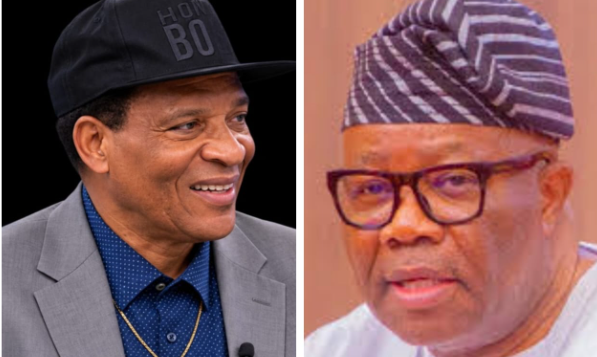
Says former Akwa Ibom governor’s record in infrastructure, education, healthcare and national service speaks for itself
Dr Mike Uyi, President of Global Peace Movement International UK, has defended the political and developmental legacy of Senate President Godswill Akpabio, warning that attempts to malign his reputation through what he described as blackmail and smear campaigns would be challenged through lawful means.
Uyi said Akpabio’s record as a former governor of Akwa Ibom State, former minister and current President of the Nigerian Senate should be assessed against his documented public service and contributions to national development, rather than allegations he considers politically motivated.
In a statement reflecting on Akpabio’s years in public office, Uyi maintained that the former governor had left a significant mark on Akwa Ibom State through investments in infrastructure, education, healthcare, tourism and human capacity development.
According to him, Akpabio’s administration between 2007 and 2015 witnessed extensive construction and rehabilitation of roads, expansion of public infrastructure and the introduction of social interventions intended to improve access to essential services.
He particularly highlighted the administration’s free and compulsory education policy, which covered children from primary through senior secondary school, alongside investments in classroom construction and school rehabilitation.
Akpabio’s official biography lists the construction of more than 4,000 classroom blocks and the rehabilitation of about 2,000 schools during his tenure. The administration also introduced free healthcare for children under five, pregnant women and elderly residents, while developing hospital infrastructure across the state.
Uyi said such interventions formed part of the basis for Akpabio’s reputation as a governor whose administration placed considerable emphasis on infrastructure and social development.
He also cited investments in transportation, tourism and industrial development, including the Ibom International Airport, the Godswill Akpabio International Stadium, road networks, hospitality facilities and the Ibom Power Plant.
The former governor’s official profile also identifies the completion of a 191-megawatt power project and the development of associated gas infrastructure as part of his administration’s industrialisation efforts.
According to Uyi, these projects should remain part of the broader public assessment of Akpabio’s years in government, particularly in a country where questions of infrastructure, employment, education and access to healthcare continue to shape public debate.
Beyond state-level governance, Uyi drew attention to Akpabio’s role in promoting a national image of unity and cultural expression, citing the Guinness World Records recognition achieved by the Godswill Akpabio Unity Choir.
On December 13, 2014, a gathering of 25,272 carol singers performed at Uyo Township Stadium in Akwa Ibom State, setting the Guinness World Records mark for the largest group of carol singers. The choir performed a medley of traditional Christmas songs, bringing together thousands of participants in an event that attracted international attention.
Uyi described the achievement as an example of how initiatives originating in Akwa Ibom could attract global recognition, adding that Akpabio’s supporters viewed the event as part of his broader efforts to promote unity and showcase the state.
He maintained that Akpabio’s record should also be considered in the context of his subsequent responsibilities at the national level, including his service as a senator, Minister of Niger Delta Affairs and President of the Senate.
As Senate President, Akpabio occupies a central position in Nigeria’s legislative institution, which is constitutionally responsible for lawmaking, oversight of the executive arm and representation of citizens through their elected senators.
Uyi said the office carries substantial responsibility in sustaining democratic institutions, facilitating legislative business and promoting national cohesion in a politically diverse country.
He argued that disagreements over the conduct of public officials should be addressed through evidence-based scrutiny, established legal procedures and responsible public discourse, rather than allegations that have not been substantiated.
On reports and allegations he described as attempts to damage Akpabio’s reputation, Uyi warned that those responsible should be prepared to defend their claims through appropriate legal channels.
He said the Senate President had previously demonstrated restraint in dealing with individuals he considered to have maligned or defamed him, but suggested that such restraint should not be interpreted as an indication that future allegations would go unchallenged.
“There will be no withdrawal of such cases as the Senate President did in the past to those who malign and defamed him,” Uyi said, outlining what he described as the position Akpabio’s supporters should expect in response to further alleged attacks on his reputation.
Uyi stressed that freedom of expression and the right to scrutinise public officeholders remained important democratic principles, but argued that these rights should be exercised with a corresponding commitment to accuracy, fairness and accountability.
He maintained that public figures should be open to criticism and investigation, while also retaining the right to seek legal redress where they believe false statements have caused reputational damage.
The Global Peace Movement International UK president called for responsible engagement in public discourse, urging commentators and political actors to distinguish between legitimate criticism, verifiable evidence and allegations that remain unproven.
He said Nigeria’s democratic development would benefit from a political culture in which public records were examined objectively and disputes were resolved through lawful institutions.
Uyi reiterated that, in his assessment, Akpabio’s years in public service had produced projects and initiatives that would continue to feature in discussions about governance and development in Akwa Ibom State.
He maintained that the former governor’s supporters would continue to defend his record while allowing established legal and democratic processes to determine disputes arising from allegations against him.