.png?alt=media&token=155810c5-21da-41d1-bf73-5df542c25145)
By Agbonavbare Victor Omoregbe
As the Federal Government moves to deliver measurable reductions in transportation costs from October 1, states are adopting different approaches to the Compressed Natural Gas initiative, with some already operating subsidized transport services while commercial operators in several others complain about inadequate refueling infrastructure, high conversion costs and long queues at existing stations.
The uneven rollout has raised questions about the ability of transport operators and state governments to deliver cheaper fares across the country within the timeline set by President Bola Tinubu.
The President, after meeting the 36 state governors on August 27, announced an implementation committee for the National Affordable CNG Transit Programme under the Nigeria Governors’ Forum, chaired by Governor AbdulRahman AbdulRazaq.
President Tinubu urged states to work with transport unions and commercial operators, support vehicle conversion and fleet deployment, and ensure that savings from cheaper energy were passed on to commuters through lower fares. The Presidency said more than 120,000 vehicles had been converted, with over 400 certified conversion centres and more than 90 CNG refuelling stations across the country.
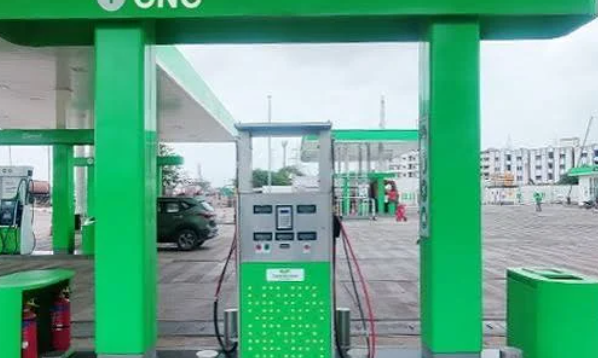
While the Federal Government says the infrastructure is expanding, transport operators in some states say the available facilities remain inadequate to support widespread conversion.
Another concern among some motorists and passengers is safety. A middle-aged man, Oladeinde Lekan, said he remained worried about the possibility of CNG-related accidents despite government assurances about safety.
The shortage of stations has also attracted concern from transport industry leaders.
The National Association of Road Transport Owners (NARTO) National President, Yusuf Othman, said the queues were costing operators valuable time.
The President stated that the queues in CNG stations are really costing them time and this is because of the non-availability of refilling stations. Saying the stations are not many; therefore, because of those long queues, they lose a lot of time and money.
Othman, however, said more stations were being developed and that increased infrastructure would gradually reduce the queues.
He added that despite the difficulties associated with the rollout, CNG remained cheaper than petrol.
The situation in the various states shows the contrast between existing subsidised transport schemes and the slower adoption of CNG by private commercial operators.
Edo State is also preparing to deploy more CNG buses, with the Commissioner for Information and Strategy, Kassim Afegbua, saying more than 50 52-seater buses would be launched in October.
A transport union official in the state, however, said commercial operators continued to face high maintenance costs and queues at CNG stations.
The government has also introduced financing arrangements aimed at helping motorists and commercial operators spread the cost of vehicle conversion rather than paying the full amount upfront.
The President has pointed to examples from states where CNG and alternative-energy transport have already reduced fares. According to the State House, Borno has CNG and electric transport services charging between N50 and N100 on routes where commercial operators charge N300 to N600, while CNG buses in Oyo initially reduced the Lagos-Ibadan fare from about N8,000 to N3,200. Adamawa recorded fare reductions of up to 50 per cent, while Enugu reduced the Enugu-Nsukka fare from N2,500 to N1,500.
The figures demonstrate the potential of cheaper energy to reduce transport costs, but the reports from commercial operators across the country show that lower fuel prices alone may not immediately translate into lower fares.
For operators, the cost of vehicle conversion, access to refuelling stations, queues, spare parts, maintenance, financing and road conditions all influence the cost of running commercial vehicles.
The challenge, therefore, is moving beyond isolated examples of subsidised transport to a sufficiently broad CNG network that can support commercial operators on urban and inter-state routes.
For commuters, the difference is already visible in places where governments have deployed subsidised buses, but in states without sufficient CNG infrastructure, petrol remains the dominant fuel for commercial transportation.
With October 1 approaching, the rollout is consequently entering a critical phase. The Federal Government says the infrastructure is expanding and has urged states to accelerate implementation, while transport operators are demanding that stations and conversion facilities be made available before they can be expected to pass CNG savings on to passengers.
Just as Othman said the only problem is the queue.” But across many states, the reports suggest that the challenge is broader: getting enough vehicles converted, ensuring reliable access to CNG, and making sure the savings eventually reach commuters through lower fares.