.png?alt=media&token=155810c5-21da-41d1-bf73-5df542c25145)
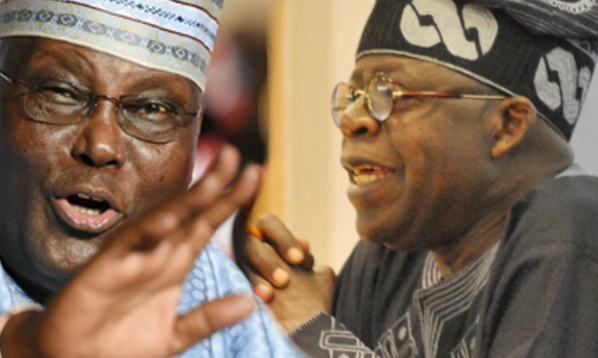
The opposition will today converge in Abuja for a summit aimed at forging a common political front and exploring a strategy to defeat President Bola Tinubu and the ruling All Progressives Congress in the 2027 presidential election, amid deep divisions over alliance arrangements and the choice of a consensus candidate.
Two opposition political parties, the Social Democratic Party and the Peoples Redemption Party, have confirmed their participation in the summit, while the Peoples Democratic Party has ruled itself out of the gathering.
The summit, organized by the political pressure group, G-100, is expected to bring together opposition parties and political actors to discuss the possibility of greater cooperation ahead of the 2027 general elections.
The G-100, led by former Director-General of the Progressives Governors Forum, Salihu Lukman, has argued that a fragmented opposition would struggle to dislodge an incumbent with the organizational and financial advantages of a ruling party.
In a statement on Sunday, a day before the summit, the group urged opposition parties to put aside their differences and approach the meeting with a willingness to cooperate.
The G-100 acknowledged that participating parties had different histories, structures and presidential ambitions, but said those differences should not prevent them from working together where their interests converge.
The G-100 recognizes that every political party has its own history, identity, ambitions and legitimate interests. Cooperation does not require any party to surrender these. Nor does it require political leaders to abandon their aspirations.
The group said past elections had demonstrated the risks of an opposition divided among several candidates, arguing that fragmentation could enable an incumbent to retain power even when there was significant dissatisfaction with the government.
The experience of elections in Nigeria and elsewhere has repeatedly demonstrated that a divided opposition often strengthens the incumbent.
When parties competing for the same broad constituency fragment their energies, resources and votes, they risk turning their differences into an unintended advantage for those they seek to replace.
The G-100 said. division is a choice. Cooperation must now become a strategy.
Confirming the participation of the Social Democratic Party, its National Publicity Secretary, Rufus Aiyenigba, said the party was prepared to work with other Nigerians and political groups seeking an alternative political direction for the country.
He confirmed that the party’s presidential candidate, Prince Adewole Adebayo, and its national leadership would attend the summit.
According to Aiyenigba, the gathering would provide an opportunity for opposition parties to explore practical areas of cooperation and coordination ahead of the 2027 elections.
The People Democratic Party, however, said it was neither involved in nor aware of the planned summit and ruled out participating in any opposition alliance discussions outside its own structures.
The party’s position was conveyed by the spokesman of its National Caretaker Committee, Jungudo Mohammed.
The G-100 nevertheless said the summit was not intended to force participating parties to abandon their identities or ambitions.
It urged the parties and their leaders to approach the discussions “in good faith, with an open mind and with the larger interests of Nigeria at heart.
The group also cautioned against turning the summit into another contest for influence among opposition politicians.
The push for opposition cooperation comes as several political parties and prominent politicians prepare for the 2027 presidential election, with President Tinubu seeking a second term in office.
The possibility of a single opposition candidate has generated considerable debate within opposition circles, but differences over presidential ambitions, party structures and the terms of any possible alliance remain major obstacles.
The G-100’s latest appeal is therefore an attempt to move the discussion beyond calls for unity and towards a framework for practical cooperation among opposition parties.
The group said the opposition had a historic opportunity to respond to Nigerians seeking an alternative to the ruling party.
Efforts to get the positions of the African Democratic Congress and the Nigeria Democratic Congress were not fruitful as of the time of filing this report.