.png?alt=media&token=155810c5-21da-41d1-bf73-5df542c25145)
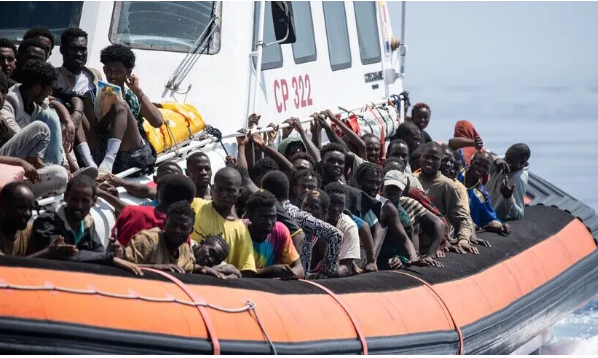
Migrant journeys have become significantly deadlier in several major migration corridors despite a sharp decline in the number of people arriving in Europe, according to new data released by the International Organisation for Migration (IOM).
IOM’s Global Overview of Migration Routes (January–April 2026) found that deaths and disappearances along the Central Mediterranean Route more than doubled during the first four months of 2026 compared with the same period last year.
A total of 821 migrants died or went missing along the route, representing a 111 per cent increase, while arrivals fell by 46 per cent to 8,577.
More than half of the deaths — 430 — were recorded in January, when Cyclone Harry struck the region.
The situation was also significantly worse along the Eastern Mediterranean Route, where 244 people died, an increase of 259 per cent. IOM said many of the deaths were linked to sea crossings that ended in disasters near Crete.
“Fewer arrivals do not mean safer journeys,” IOM Deputy Director General Ugochi Daniels said, stressing that saving lives at sea and on land remains a shared responsibility.
The Western African Atlantic Route recorded the steepest decline in arrivals to Europe, with arrivals in Spain falling by 78 per cent to 2,276. IOM said departure points have shifted further south along the West African coast, resulting in longer and more dangerous sea journeys.
However, migration increased on some routes. Arrivals in Spain through the Western Mediterranean Route rose by 66 per cent to 5,647, largely due to a threefold increase in land crossings into Ceuta and Melilla.
Along the Horn of Africa Eastern Route, arrivals in Yemen increased by 9 per cent to 70,200, consistent with seasonal migration patterns.
In contrast, northbound migration through Panama’s Darién region almost came to a halt, with only 135 transits recorded during the reporting period.
IOM also reported that the escalation of hostilities in the Middle East from late February affected migration and displacement patterns. Large-scale displacement was recorded in Lebanon, while cross-border returns to Syria increased during March and April. Labour migration and remittance flows across South Asia, the Middle East and Africa also came under pressure.
Daniels noted that migration is not limited to movement towards Europe, pointing out that nearly half of the world’s 304 million international migrants live within their own regions, moving for employment, family, education and safety.
The IOM report draws on data from the organisation’s Displacement Tracking Matrix (DTM), Missing Migrants Project, Regional Data Hubs and government partners to provide an overview of migration trends across major routes between January and April 2026.
The findings underscore a growing concern among migration experts: a reduction in migrant arrivals does not necessarily indicate safer migration. In some cases, it may mean that journeys have become longer, more clandestine and more dangerous.