.png?alt=media&token=155810c5-21da-41d1-bf73-5df542c25145)
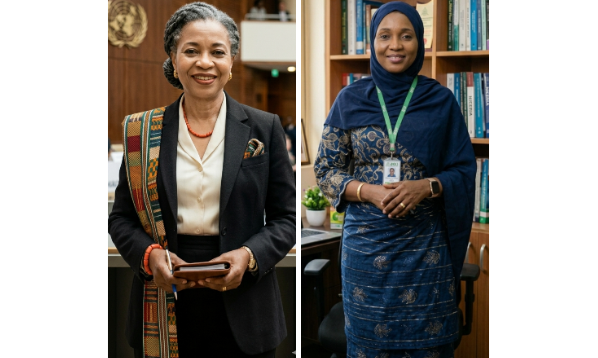
The Chairman of the Nigerian Interest Protection Forum, Dr. Chidebere Chiamaka Ifesinachi, and the President of the Sustained Policy and Reform Coalition, Dr. Hauwa Ladi Usman, have separately condemned recent comments made by social media content creator and aspiring federal lawmaker, Peter Otu Akah, over the amendment of the Electoral Act 2026.
Peter Otu Akah, in a video posted on his Facebook page, had launched a verbal attack on Senate President Godswill Akpabio and members of the National Assembly following the passage of the amended Electoral Act 2026.
In the now-viral video, the content creator described lawmakers as “useless” and “unproductive,” while referring to the 10th National Assembly as a “Tinubu Day Care National Assembly” and a “Tinubu Crèche.” He further described the Senate President as “shameless” and alleged that lawmakers were “bent on stealing power from the people.”
Reacting to the development, Dr. Ifesinachi described the remarks as reckless, uncivil and reflective of what he called Peter’s poor understanding of democratic governance and legislative procedures.
According to her, while criticism remains an integral component of democracy, attacks laced with insults, misinformation and deliberate attempts to incite public anger against democratic institutions must be condemned by all well-meaning Nigerians.
Dr. Ifesinachi noted that the amended Electoral Act 2026 was neither the personal decision of the Senate President nor an imposition on Nigerians, stressing that the bill went through constitutionally recognised legislative processes involving public hearings, committee scrutiny and contributions from elected representatives across party lines.
She argued that individuals genuinely interested in strengthening Nigeria’s democracy had opportunities to participate during stakeholder engagements and public consultations preceding the amendment process.
The Nigerian Interest Protection Forum chairman said it was ironic that people who ignored civic participation channels now seek relevance through social media sensationalism and inflammatory rhetoric.
She questioned Peter Otu Akah’s preparedness for public office, noting that someone aspiring to represent constituents in the House of Representatives ought to possess a basic understanding of parliamentary procedures, legislative ethics and decorum.
Dr. Ifesinachi said the frequent resort to insults and emotional outbursts instead of constructive policy engagement exposed what he described as “political immaturity and intellectual shallowness.”
She further stated that aspiring lawmakers should demonstrate competence, vision and capacity for consensus-building rather than attempting to gain public sympathy through attacks on national institutions and respected political leaders.
According to her, Nigeria’s democracy cannot thrive in an atmosphere where individuals seeking public office continuously demonise institutions simply because they disagree with certain outcomes.
The group chairman also warned that public figures, especially those with growing online followership, must understand the legal and social implications of making defamatory and inciting comments capable of undermining public confidence in democratic governance.
Dr. Ifesinachi maintained that President Bola Ahmed Tinubu, Senate President Godswill Akpabio and several senior political leaders in the country had built their political careers over decades through strategic engagement, grassroots mobilisation and democratic participation.
She said such leaders could not reasonably be accused of relying on manipulation to attain political relevance, adding that they remain experienced political actors with proven records in governance and nation-building.
In a separate reaction, President of the Sustained Policy and Reform Coalition, Dr. Hauwa Ladi Usman, said Peter Otu Akah’s comments represented a dangerous trend where social media popularity is mistaken for political competence and policy expertise.
Dr. Usman stated that there was a clear distinction between entertainment-driven online activism and the serious responsibility of national lawmaking.
She expressed concern that individuals with little understanding of constitutional processes now position themselves as moral authorities on issues they scarcely comprehend.
According to her, the amendment of electoral laws is a complex constitutional responsibility requiring extensive consultations, legal drafting and institutional deliberations, not the simplistic narratives being circulated online for clout and public applause.
She said it was disappointing that someone aspiring to sit in the National Assembly would openly display what she termed “limited knowledge of how the legislature functions.”
Dr. Usman added that democracy thrives on informed criticism, not bitterness, falsehood or calculated attempts to discredit institutions for personal political gain.
The Sustained Policy and Reform Coalition president urged Nigerians to disregard narratives aimed at portraying the National Assembly as anti-people, insisting that the current legislature remained committed to strengthening democratic institutions and promoting national development.
She also called on young political aspirants to embrace issue-based politics anchored on ideas, competence and constructive engagement instead of insults and divisive rhetoric.
Dr. Usman further advised Peter Otu Akah to focus on developing a deeper understanding of governance, public administration and legislative responsibility if he truly intends to pursue a political career.
She maintained that national leadership requires discipline, emotional intelligence, policy depth and respect for democratic institutions, qualities she said must be cultivated over time rather than manufactured through social media outrage.
The coalition president reaffirmed confidence in the leadership of Senate President Godswill Akpabio and the 10th National Assembly, noting that despite criticisms, the legislature continues to play its constitutional role in advancing reforms and stabilising Nigeria’s democratic system.