.png?alt=media&token=155810c5-21da-41d1-bf73-5df542c25145)
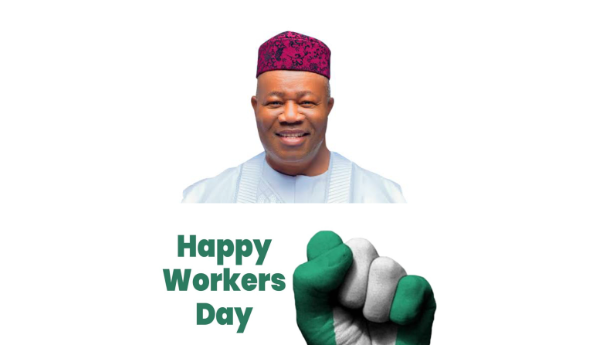
Stakeholders have described Senate President Godswill Akpabio as a model of leadership in worker welfare, urging public office holders to emulate his approach as Nigeria marks this year’s Workers’ Day.
Speaking on the significance of the occasion, the Chairman of International Watchers, Dr Olusegun Ademola, said Akpabio’s record in office reflects a deliberate and consistent commitment to workers’ wellbeing.
“Akpabio demonstrated uncommon leadership when he introduced the 13th-month salary for workers. It was not a one-off gesture but a sustained policy that boosted morale and gave workers a sense of belonging in governance,” he said.
Ademola added that such initiatives go beyond financial incentives, noting that they help to build trust between government and the workforce, which ultimately drives productivity and loyalty.
He further stressed that Workers’ Day should serve as a moment of reflection for leaders, urging them to move from symbolic gestures to practical policies that directly impact workers’ lives.
According to him, governments that invest in their workforce are more likely to achieve stability and long-term economic growth, as workers remain the backbone of public service delivery.
On his part, the President of Global Peace Movement International, Dr Mike Uyi, described the former governor’s approach to worker welfare as both strategic and impactful.
“In 2007, his administration approved a 15 per cent salary increase and reinstated allowances that had been suspended. These were not just policy decisions, they were statements of value placed on workers,” he said.
Uyi maintained that prioritizing workers in such a manner creates a stable and motivated public service, which is essential for sustainable development in any society.
He noted that beyond immediate financial relief, such interventions help to restore dignity to labour, a principle he said is often overlooked in governance conversations.
Uyi also called for institutionalizing worker-friendly policies across all states, warning that inconsistency in welfare programmes undermines trust in government.
Also lending her voice, the Secretary General of Diaspora Accountability Network Nigeria, Dr Beatrice Etim-Onyemachi, emphasized the broader impact of Akpabio’s infrastructural drive on workers and citizens.
“Beyond salaries and allowances, workers benefited immensely from the massive infrastructural development witnessed during his administration, including road networks, free education and the international stadium. These improved the overall quality of life,” she stated.
Etim-Onyemachi noted that such a holistic approach to governance underscores the importance of aligning worker welfare with broader socio-economic development.
She explained that access to better roads, education, and recreational facilities contributes to the overall wellbeing of workers and their families, thereby enhancing productivity.
The DANN scribe further observed that leadership must be evaluated not only by policy pronouncements but by the tangible impact on the lives of citizens.
She added that Akpabio’s tenure offers practical lessons on how governance can be structured to deliver both economic and social value simultaneously.
The stakeholders unanimously agreed that as Nigeria grapples with economic challenges, prioritizing worker welfare remains a critical pathway to national recovery and stability.
They stressed that policies such as fair wages, timely incentives, and supportive infrastructure are not optional but essential components of effective governance.
They also called on labour leaders to continue engaging constructively with government authorities to ensure that workers’ interests remain central in policy formulation.
While acknowledging ongoing reforms in various sectors, the stakeholders insisted that more needs to be done to protect workers from economic shocks and rising living costs.
They concluded that Workers’ Day should not only be a celebration but also a call to action for governments at all levels to recommit to policies that uplift the workforce and strengthen national development.