By Israel Adebiyi, Benin
The Edo State Emergency Management Agency (EDOSEMA) has described 2025 as its most dynamic operational year, recording a total of 43 emergency interventions that affected over 10,000 persons across communities in the state.
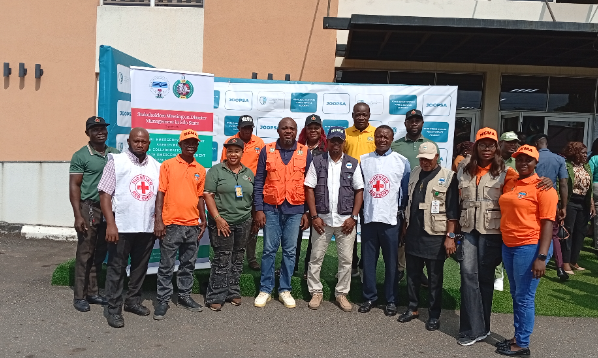
This was disclosed in the 2025 operational report presented by the Executive Director of the agency, Jerry Idahosa, at a one day Stakeholder Engagement on Disaster Management in Edo State Theme "Strengthening Disaster Management Systems: Lesson from 2025, Vision for 2026.
He said the year marked a significant milestone in Edo State’s disaster response and preparedness architecture.
According to the report, fire outbreaks accounted for a substantial portion of the agency’s emergency activities. No fewer than 15 fire incidents were recorded across different parts of the state, affecting about 1,000 persons. Honourable Idahosa noted that timely response and improved coordination with relevant stakeholders helped to limit casualties and property losses in many of the incidents.
Flooding also remained a major concern in 2025, with the agency responding to 10 flood-related incidents that affected an estimated 4,000 persons. The Executive Director explained that heavy rainfall and environmental factors contributed to the incidents, underscoring the need for stronger early warning systems and community compliance with safety advisories.
In the same period, EDOSEMA responded to 10 rainstorm and windstorm incidents, which impacted more than 3,000 persons across urban and rural communities. These incidents resulted in damaged buildings, displacement of residents and disruption of economic activities.
The report further indicated that one major banditry or conflict-related incident was recorded in 2025, affecting about 2,000 persons. Honourable Idahosa said the agency’s response focused on humanitarian intervention, coordination with security agencies and the provision of relief materials to affected communities.
Beyond emergency response, the agency organised seven statewide stakeholders’ training programmes in 2025 to strengthen flood preparedness and improve disaster response coordination. The Executive Director said the trainings enhanced institutional capacity and helped improve response efficiency during emergencies.
Looking ahead, Honourable Idahosa said the agency’s 2026 mission is anchored on seven strategic pillars aimed at transforming disaster management in Edo State.
The first pillar centres on faster and smarter response, with plans to deploy state-of-the-art communication and dispatch systems capable of reducing emergency response times by up to 60 per cent. As part of this initiative, zonal response hubs will be established across Edo South, Edo Central and Edo North to bring emergency services closer to communities. Real-time reporting and GPS tracking will also be integrated to improve coordination and enhance the safety of field personnel.
The second pillar focuses on stronger community engagement. Under the Safe Communities Initiative, local volunteers and youth groups will be empowered to act as first responders before official emergency teams arrive. Disaster awareness campaigns will be expanded to schools, markets and religious centres, while every local government area is expected to have an active Community Emergency Response Team by the fourth quarter of 2026.
Data-driven preparedness forms the third pillar of the strategy. The agency plans to adopt GIS-based risk mapping and real-time monitoring to identify flood-prone and high-risk areas. Early warning systems will be strengthened to deliver SMS and radio alerts to communities ahead of potential disasters, while regular disaster risk assessments will guide planning and resource allocation.
Capacity building and staff development constitute another key focus. Honourable Idahosa said continuous training programmes will be intensified, alongside plans to establish an emergency management academy through strategic partnerships to offer certification and specialised courses. Improvements in staff welfare and insurance coverage are also part of the reform agenda.
The remaining pillars include greater collaboration and partnerships with federal agencies, security institutions, development partners and community-based organisations, as well as a renewed commitment to transparency and accountability in disaster management operations.
Honourable Idahosa expressed confidence that lessons learned from 2025, combined with the reforms outlined for 2026, will significantly strengthen Edo State’s disaster preparedness and response capacity, while reducing the humanitarian and economic impact of emergencies across the state.