
By Israel Adebiyi
Experts have urged media professionals drawn from both print and broadcast organisations to prioritise accuracy, ethical standards, and proper follow-up in the documentation and reporting of Sexual and Gender-Based Violence (SGBV) cases in Nigeria.
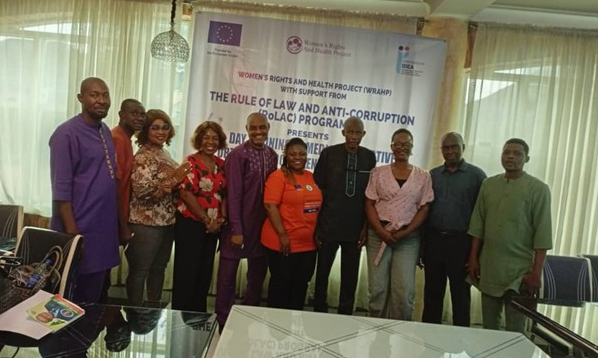
The charge was made during a two-day capacity-building workshop organised by the Women’s Rights and Health Project (WRAHP) in Benin City, Edo State, held between December 9 and 10, as part of efforts to strengthen justice delivery for survivors of SGBV in Edo and Lagos States.
Facilitators at the training said the initiative is designed to improve access to justice-related social services for women and girls who have survived various forms of gender-based violence, while also equipping journalists with the skills required to responsibly cover such sensitive issues and support advocacy for justice.
In his opening remarks, the Programme Manager of WRAHP in Lagos, Festus Umoh, said the organisation is committed to promoting the health and development of women, girls, communities, and men. He explained that WRAHP’s vision is anchored on building a just society where the dignity of all persons is respected and individuals are empowered to reach their full potential.
Umoh further outlined the organisation’s key focus areas, including health interventions targeting communicable and non-communicable diseases, the promotion of women’s rights, safeguarding against SGBV, sexual and reproductive health rights, and advancing gender equality and inclusivity.
He also highlighted some of the organisation’s achievements, which include the establishment of the Ireti Resource Centre in 2020, psychosocial support for over 1,000 survivors of SGBV, securing convictions against two perpetrators, and ongoing training programmes for advocates who support survivors through referrals and community awareness initiatives.
Presenting an overview of the Rule of Law and Anti-Corruption (RoLAC) project, WRAHP Programme Manager, Chris Irogue Igbinosa, explained that the European Union-funded initiative, implemented by the International Institute for Democracy and Electoral Assistance (International IDEA), is aimed at strengthening justice systems and anti-corruption reforms in Nigeria.
He noted that the project focuses on improving the performance of the criminal justice system, expanding access to justice for vulnerable groups such as women, children, persons with disabilities, and SGBV survivors, as well as enhancing transparency and accountability in governance. He added that RoLAC also supports legal and policy reforms, strengthens justice institutions, promotes civil society engagement, and builds capacity across the justice sector in selected Nigerian states, including Edo.
Speaking on the role of the media in addressing SGBV, Dr. Nosakhare Erhunmwunsee, an academic, cleric, and gender rights advocate, emphasised that journalism must go beyond awareness to truthful and responsible reporting. He said the media plays a critical role in breaking the silence around abuse, educating the public, shaping attitudes, and promoting empathy towards survivors.
Dr. Erhunmwunsee also stressed the importance of ethical reporting practices, including sensitivity in language use, fact-checking, obtaining informed consent, and protecting the identity and dignity of survivors. According to him, responsible journalism can help expose perpetrators, hold institutions accountable, and connect survivors with necessary support services.
He further identified key drivers of SGBV to include poverty, patriarchal norms, cultural practices, and power imbalances, while noting that the consequences often range from physical injuries and psychological trauma to sexually transmitted infections, unintended pregnancies, and unsafe abortions.
In her goodwill message, the RoLAC Coordinator in Edo State, Uchenna Nwokedi, called on journalists to strengthen efforts in protecting the identity of survivors, reducing stigma, and building public confidence in reporting systems. She also encouraged media practitioners to stay updated on emerging trends in SGBV cases to enhance their reporting capacity.
Earlier, the Executive Director of WRAHP, Uchenna Bose Ironsi, described violence against women as a societal ill that must be collectively rejected. She noted that the organisation operates on three key pillars focused on prevention and efficiency, and urged participants to apply the knowledge gained from the training to improve reporting standards and contribute to reducing cases of SGBV in society.